

Planet
& Product
Environmental protection in the conduct and development of our activities is not merely the result of compliance with applicable regulations; it is also a fundamental principle for the F.I.L.A. Group. In carrying out our business, we are committed to adopting policies and processes aimed at maintaining and enhancing the quality and safety of our products, while at the same time promoting the responsible management of environmental impacts.
The measures we adopt contribute to achieving the following Sustainable Development Goals:
53%
of waste is recycled and reused
56%
decrease compared to 2022
141,344 m3
reduction in water withdrawals compared to 2022
11,821 t CO2
Scope 1 emissions
14,544 t CO2
Scope 2 emissions
103,500 t CO2
Scope 3 emissions
Forests face numerous climatic, ecological, anthropogenic, and socioeconomic challenges. Their protection requires the engagement and collaboration of all stakeholders throughout the value chain. Wood and wood-derived material certification systems help promote responsible forest resource management practices and ensure the traceability of materials along the supply chain. These systems contribute to biodiversity conservation, the renewal of forest resources, habitat protection, and the mitigation of impacts associated with forestry activities.
The FILA Group manufactures finished products such as drawing paper, pencils, and crayons that are certified according to FSC® (Forest Stewardship Council®) and PEFC™ (Programme for the Endorsement of Forest Certification) standards.
To reduce waste, a recovery system has been implemented for the residual materials generated during wood processing. This long-established practice within the F.I.L.A. Group is fully aligned with its circular economy approach. Examples include the use of tree bark and wood dust as fuel for heat generation at the Oaxaca plant in Mexico, as well as the reuse of wood residues in the production of selected pencil ranges and canvas frames at the Brideshore facility in the Dominican Republic. All wood-processing sites are equipped with chip and dust extraction systems, with the collected materials being directed to various recovery and reuse applications.
The Group has launched a phased adoption plan for ISO 14001:2015 environmental certification across its manufacturing facilities, with the aim of structuring and formalizing the management of environmental aspects associated with its operations. In accordance with the requirements of the standard, each site conducts an assessment of its environmental aspects and impacts, establishes improvement objectives and programmes, implements procedures and controls for managing environmentally significant activities, and periodically monitors its performance through a review and continuous improvement process of the Environmental Management System, with the involvement of relevant functions and interested stakeholders.
As of 31 December 2025, 15 out of 19 manufacturing sites hold ISO 14001 certification for their Environmental Management Systems: F.I.L.A. S.p.A. (Pero facility and Rufina offices), Canson France (Grand Murier, Moulin du Roy and St. Germain), St. Cuthberts, F.I.L.A. Argentina, Lyra Germany, Dixon Ticonderoga Art, Daler-Rowney (Bracknell), Canson Brazil, F.I.L.A. Arches, Canson Art & Craft Yixing Co., Ltd, and Dixon Mexico (Tultitlán and Oaxaca). Currently, 1,901 employees working in manufacturing facilities, representing 72% of the Group’s total workforce (65% in 2024), are employed at sites certified to ISO 14001.
Plastic is an essential raw material that helps ensure the functionality, safety, durability, and affordability of a wide range of products. There are many different types of plastics, each offering specific properties that contribute to the performance and functionality of the product itself.
Today, most of the plastic available worldwide is still derived from fossil-based sources, primarily petroleum, and is used across numerous sectors to manufacture durable and semi-durable goods, components, and materials that are part of our everyday lives. The field of sustainable plastics is continuously evolving, and our commitment to testing and researching new solutions aligned with the principles of the circular economy, promoting the recovery of waste materials and the reduction of waste generation, is paving the way for new applications of these materials and their progressively wider use, where compatible with the requirements and performance standards of the Group’s products.
Bioplastics
In recent years, the search for innovative solutions in the field of bioplastics has accelerated significantly. Bioplastics can be broadly divided into two main categories:
• Bio-based plastics*, which contribute to reducing CO₂ emissions and are produced from renewable, non-fossil resources. This category includes bio-based, non-biodegradable polymers, such as bio-based PE (polyethylene) and bio-based PET (polyethylene terephthalate).
• Biodegradable plastics, which are produced from organic feedstocks or from synthetic polyesters specifically designed to be biodegradable, allowing them to break down more rapidly in the environment, also thanks to their typically very thin structure. Examples of biodegradable plastics include those made from corn starch, wheat, tapioca, potatoes, potato starch, or plant-based waste such as potato peels. Today, these plastics are widely used in applications such as shopping bags and organic waste collection bags.
*The renewable or bio-based content of our products is scientifically verified by measuring the percentage of the carbon isotope ¹⁴C, which is not present in petroleum or petroleum-derived materials. The reference standard for this determination is ASTM D6866, “Standard Test Methods for Determining the Biobased Content of Solid, Liquid, and Gaseous Samples Using Radiocarbon Analysis.”
In our Research & Development departments, we have studied and tested bioplastics to assess their suitability for our products, their sustainability within industrial processes, and their performance in the finished product.
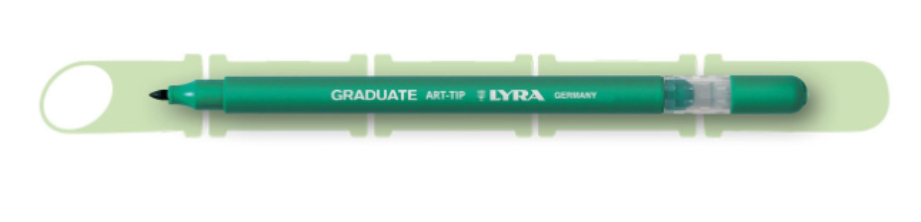
After extensive research and numerous trials, in 2023 the FILA Group introduced sugarcane-based bio-based plastic at an industrial scale for the first time in the production of a water-based ink marker under the LYRA Graduate ART-TIP brand. This artistic drawing marker delivers performance comparable to markers made from fossil-based plastics while containing 64% bio-based plastic (in the barrel, cap, and coloured cap components).
Recycled and Regenerated Plastics
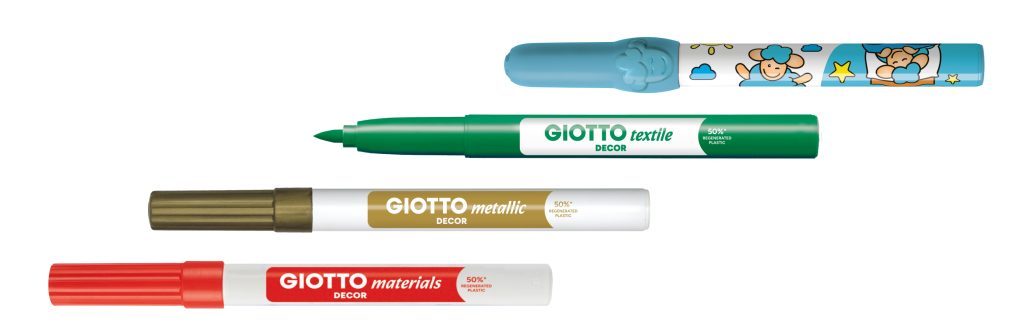
The use of recycled and regenerated plastics has been introduced at several Group production sites with the aim of replacing or progressively reducing the use of fossil-based plastics. As a result, a number of finished products are now manufactured using these materials, ranging from Tratto1 ballpoint pens, produced in Italy with polymer compounds made from secondary raw materials (plastics derived from end-of-life waste recovery processes) and industrial by-products, to the Giotto DECOR multi-surface marker range in the Metallic, Materials, and Textile versions, which are made with regenerated Ecomeplen material, as well as the more recently launched Giotto be-bè markers for children.
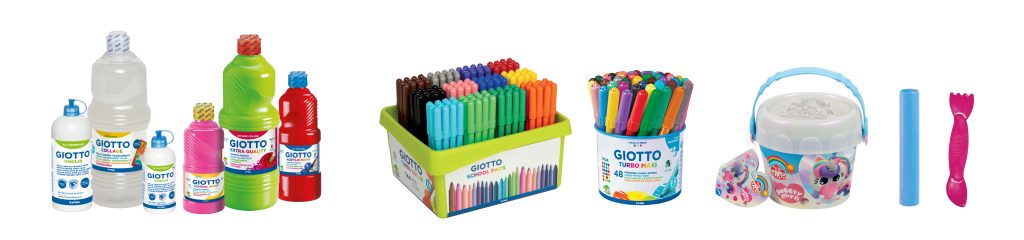
In addition to finished products, for both the packaging we purchase and that produced internally within the Group, we have been progressively introducing recycled and regenerated plastics for several years. Examples include plastic bottles containing at least 30% recycled plastic (recycled PET), manufactured at the Canson facility in Saint-Germain for packaging Giotto-branded paints and liquid glues, as well as durable and semi-durable containers such as “school packs”, jars for Giotto-branded markers and coloured pencils, and toy buckets and play accessories for young children sold together with Didò modelling dough. These products are manufactured at the FILA facility in Rufina (Florence) using regenerated plastic.
Water is the primary natural resource used in paper production. For this reason, the quality of watercourses is a key priority for us. Canson® paper mills use the exceptionally pure water of the Ardèche watershed in France. The waterways surrounding the Canson® mills are classified as Category 1 (“excellent quality”) by the French Water Agency (Agence de l’Eau).
Today, only water-based inks are used for printing Canson® folders, drawing paper, and graph paper. In addition, we use a neutral adhesive in the production of our glued pads, which not only offers environmental benefits but also helps ensure the optimal preservation of artwork over time.
During the product design phase, we strive to minimize waste generation at the source. Our efforts have focused on reducing the amount of paper waste by optimizing production processes and roll widths, reducing cutting losses, and improving the efficiency and reliability of our equipment. Daler-Rowney has invested in the latest basket mill technology, enabling it to prepare pigment dispersions in-house. This has significantly reduced not only water consumption but also energy use and transport-related emissions.
In the F.I.L.A. Group’s manufacturing processes, water is used in paper mills (St. Cuthberts in the United Kingdom, and Canson and FILA Arches in France), in the production of paints, tempera paints and adhesives (at Canson facilities in France, Grupo F.I.L.A.-Dixon in Mexico, Daler-Rowney in the United Kingdom, Industria Maimeri in Italy, F.I.L.A. Yixing in China, and Canson Brazil), and in the production of modelling compounds (at the Rufina facility in Italy, Canson Brazil, and Grupo Dixon in Mexico).
All the Group’s water withdrawals and discharges comply with local regulatory requirements and are subject to periodic monitoring and verification. The Group companies have adopted specific policies, investments, and objectives to reinforce their commitment to reducing water consumption.
At Canson France, Grand Mûrier, a stormwater settling basin was constructed in 2017 to separate potential pollutants, such as hydrocarbons, before controlled discharge into the environment. At Canson France, Moulin du Roy, an effluent treatment plant is in operation to treat wastewater prior to its release into the watercourse, and a feasibility study has been launched to identify opportunities for reducing water withdrawals.
At the Châlons-en-Champagne production site, a wastewater treatment plant is used to treat industrial wastewater generated by manufacturing processes. At the St. Cuthberts paper mill, a new effluent treatment plant was commissioned in 2019, enabling water to be treated before being partially reused in the production process and subsequently discharged into the river system.
At FILA Arches, a mixed wastewater treatment station is in place, combining both physicochemical and biological treatment processes. This system enables up to 25% of the treated water to be reused while reducing environmental impacts. The treated water is purified and then safely returned to the environment.
The wastewater treatment plant at the Oaxaca facility of Dixon Mexico separates water from the wax used in the manufacturing process.
Learn more in our Sustainability Reports
Durability and performance are key factors in reducing waste. This is a philosophy that guides everything we do, every day.
Our markers are designed to last a long time because their plastic components are engineered to prevent ink evaporation. We select fiber tips that are both soft and durable, resistant to deformation and capable of ensuring the complete use of the ink contained in the reservoir.
Our pencils and colored pencils are made with strong, highly pigmented cores that deliver vibrant color immediately while wearing down slowly. Our glue sticks do not crumble; they are compact and release the right amount of adhesive onto the paper for optimal use. Likewise, our poster paints are rich and concentrated, so that a small quantity provides excellent coverage and performance.
Finally, our pens, highlighters, and markers feature large ink reservoirs, allowing them to write for longer.
In 2022, PONGO, the iconic Italian modeling clay brand produced at our Rufina (Tuscany) facility, celebrated its 70th anniversary and became even more sustainable through enhanced product performance. Its new plant-based formula, partly made from raw materials derived from renewable sources, delivers a modeling clay that remains soft, features bright and vivid colors, does not dry out when exposed to air, is easier to shape and manipulate, and can be easily washed off hands and surfaces.
A Focus on
Packaging
The selection of materials for packaging and packing solutions is another key aspect of the Group’s sustainability journey. For this reason, our goal is to progressively reduce packaging to the minimum necessary, optimizing and compacting packaging wherever possible to minimize waste generation and associated environmental impacts.
We continuously seek lower-impact packaging solutions, prioritizing the use of cardboard, preferably made from recycled content. At the same time, we are progressively reducing the use of plastic packaging while ensuring product integrity during transportation and at the point of sale.
Most of the packaging currently in use is made from a single material, making it easier to recycle through separate waste collection systems. In addition, we are gradually replacing fossil-based plastics with alternative materials, such as recycled PET (R-PET), for applications including pouches and blister packs.
Two recent examples include:
The packaging and packing materials used for our modelling compounds, including the new Pongo range, where we have implemented only the essential packaging necessary to protect and preserve the product and ensure its quality for consumers. All packaging components are made from a single material and can be disposed of through separate waste collection schemes. Through the rationalisation of packaging across the modelling compound range, we now avoid the use and transportation of 4.7 tonnes of cardboard per year (estimate based on the volumes placed on the market in 2021).
Two recent examples include:
Since 2023, we have also redesigned the packaging of the Giotto Decor marker range by completely eliminating the internal plastic tray from approximately 300,000 packs, while also reducing the overall packaging size and the amount of cardboard used.
The F.I.L.A. Group quality control process, managed by the Quality Assurance department, consists of two phases: static control and process control.
“Static control” involves various tests conducted in the Group’s internal laboratories, also used to test products in the research and development phase, whereas “process control” involves various tests carried out on an ongoing and/or scheduled basis throughout the stages of the production process by production staff and Quality Assurance. Such tests are performed in addition to the technical tests required by national and international standards and/or customer specifications.
In addition to internal tests to verify product safety, F.I.L.A. Group also uses external laboratories, primarily accredited ones, to obtain third-party safety standard compliance certificates. Each of the Group’s production sites liaises and maintains an ongoing relationship with its own historical reference institute, whereas subsidiaries outside the European Union obtain certificates issued by globally accredited institutes.
The management of product safety takes the product category into account, i.e. products classified as toys, products classified as “cosmetic toys” and products classified neither as toys nor as cosmetics.
In our research and development departments, we study and test bio-plastics to understand whether they are suitable for our products, sustainability in the industrial process and performance of the finished product.
Discover our sustainability policies
